Low-MOQ Private Label: How to Brief Your First Collection
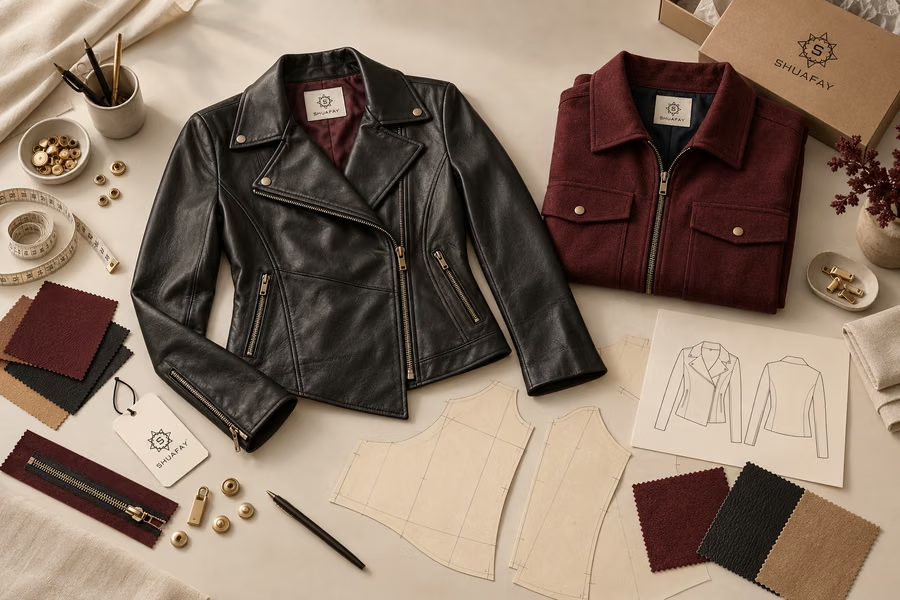
A first collection needs more than a product idea. It needs a clear brief: what you want to make, who it is for, how many units you can realistically start with and which details must stay consistent when you reorder.
SHUAFAY Industries supports small and mid-size businesses through project-specific manufacturing enquiries, private-label development and refill planning. Lower-MOQ possibilities depend on the design, materials, colours, components and branding—not a single quantity promised for every product.
Start with a focused product range
Choose the category and intended use before requesting prices. A fashion leather jacket, a riding garment and a team kit require different specifications. Define your target customer and market, then identify the features that are essential for the first run.
A smaller range of colours and a considered size breakdown can make an initial brief easier to assess. Ask how each custom material, trim or packaging requirement affects feasibility and minimum quantities.
Prepare the information that makes a quotation useful
- Product: category, intended use, reference images or a technical pack, plus the changes you want.
- Materials: preferred leather or fabric, finish, lining and acceptable alternatives.
- Quantity: total units with a size-and-colour breakdown, rather than only a grand total.
- Branding: logo artwork, placement, labels, hardware and packaging requirements.
- Destination: delivery country, timing requirements and the logistics scope you want quoted.
- Approval: sampling needs, measurement tolerances and any required testing or documentation.
If a specification is not settled, say so and describe the goal. A request for suitable alternatives is more useful than an assumption that an unspecified material or component is included.
Understand what a low MOQ depends on
Production quantity is affected by material purchasing, cutting and setup, colour runs, custom trims, tooling and packaging. A design based on available components may have different starting requirements from an entirely new development.
Ask for the product-specific minimum and the cost of the configuration you actually intend to order. Compare the total project scope, including any sampling or development charges, rather than judging an offer only by its headline unit price.
Agree the sample and specification before production
Record approved materials, colours, measurements, labels, closures and packaging in the final project documents. A reference image alone cannot define every construction detail. Changes after approval should be reviewed for their effect on cost, availability and timing.
Where protective performance or market-specific compliance is required, include that requirement in the brief. Do not assume a visual design, riding-style panel or branded illustration establishes a certification.
Compare shipping scope as carefully as product pricing
Ask the quotation to state the agreed delivery term, named place or port, included costs and the responsibilities of each party. If shipping and destination customs clearance are arranged by you, budget for them separately and confirm what is excluded from the factory quotation. The agreed commercial documents determine the actual scope.
Review the published delivery information for context, then confirm the arrangements for your bulk order directly. A retail shipping rule should not be assumed to cover a B2B freight project.
Make your first order a useful baseline for refills
Retain the approved specification and sample reference. When you reorder, identify the original project, quantities and any requested changes. Confirm current material and component availability, price and timing rather than assuming every detail can be repeated automatically.
This approach makes it easier to grow a range around real sales feedback while keeping the core product direction clear.
Turn your brief into a practical next step
Explore the SHUAFAY B2B workflow, then follow its Product Quotation link to the current enquiry service. Review the fee, any stated order-credit conditions and availability on that service page before placing an order. SHUAFAY.com centralizes the group’s commercial ordering and payment process.
Request a product quotation · Ask a project-specific question
Visuals are original SHUAFAY product-development illustrations. Final materials, construction and branding follow the approved project specification.